

- Technical difficulty: ★☆☆☆☆
Asymmetric cryptography is very useful for a variety of systems. With asymmetric cryptography, you can:
- encrypt the contents of a message in a way that only the intended recipient can decrypt it
- verify the identities of certain people or machines
- digitally sign data to make sure it really came from you
How it works
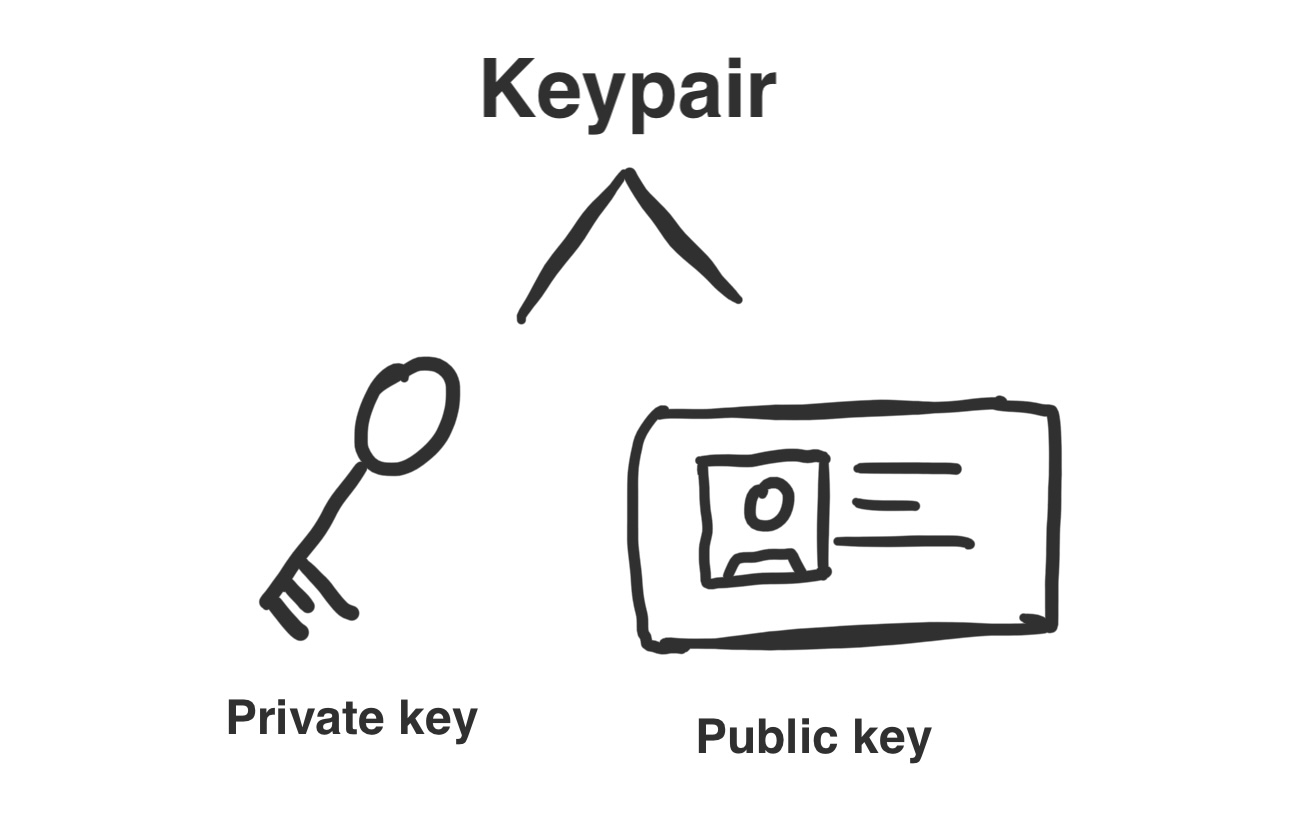
Asymmetric cryptography works by generating and using key pairs. Key pairs consist of two keys:
- The public key: This represents your identity (imagine it as a sort of ID). You can share it with anyone.
- The private key: As the name implies, this is a key that you should NEVER share with anyone. It allows you to prove that you are the owner of your public key—in other words, that you are who you claim to be.
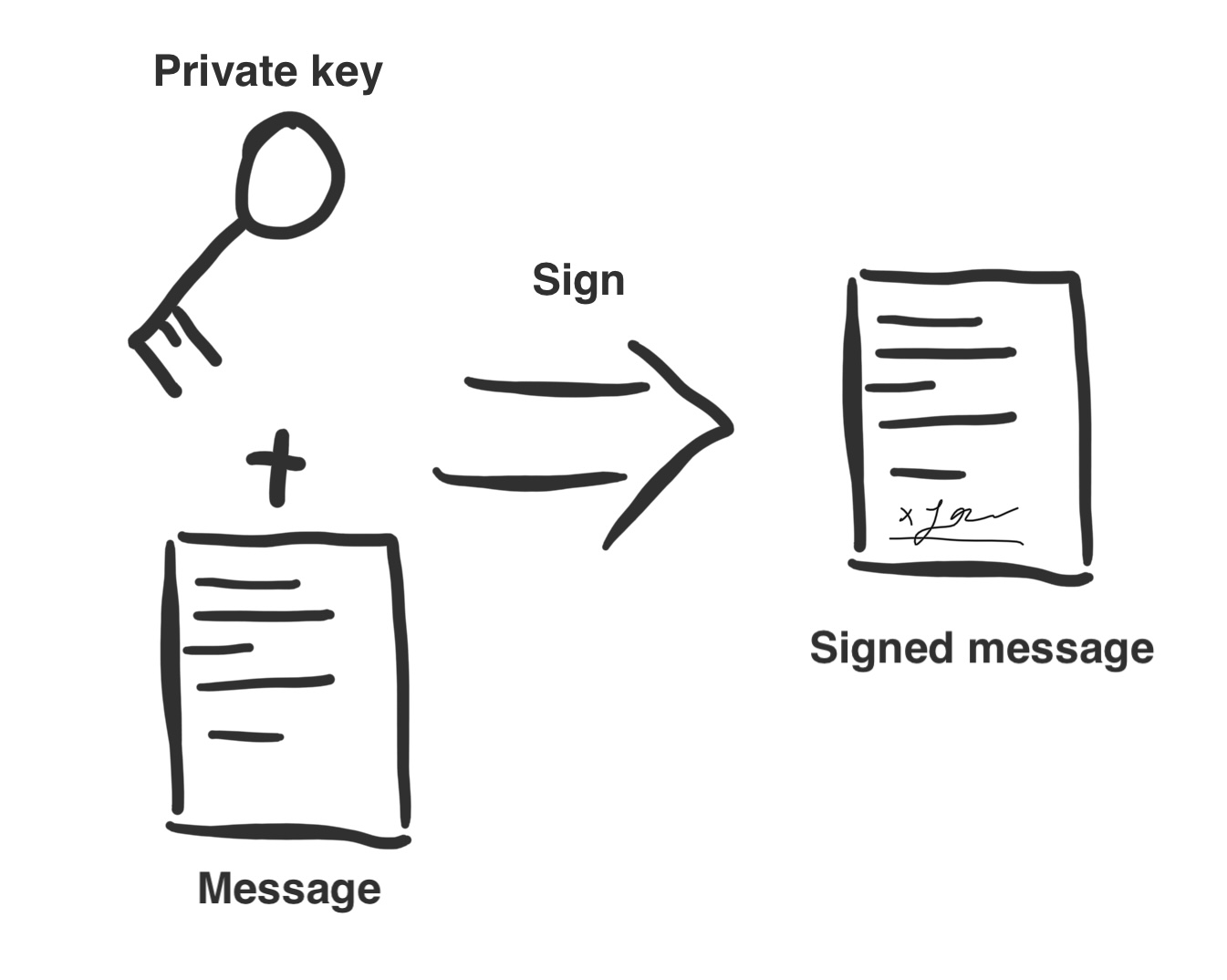
Let's imagine Alice wants to digitally sign a message to Bob to prove it is really coming from her. Here is how it works:
- Alice generates a key pair. She keeps the private key to herself and shares the public key with Bob and everyone else.
- Alice uses her private key to sign the message. This creates a signature that is unique to her private key and the message.
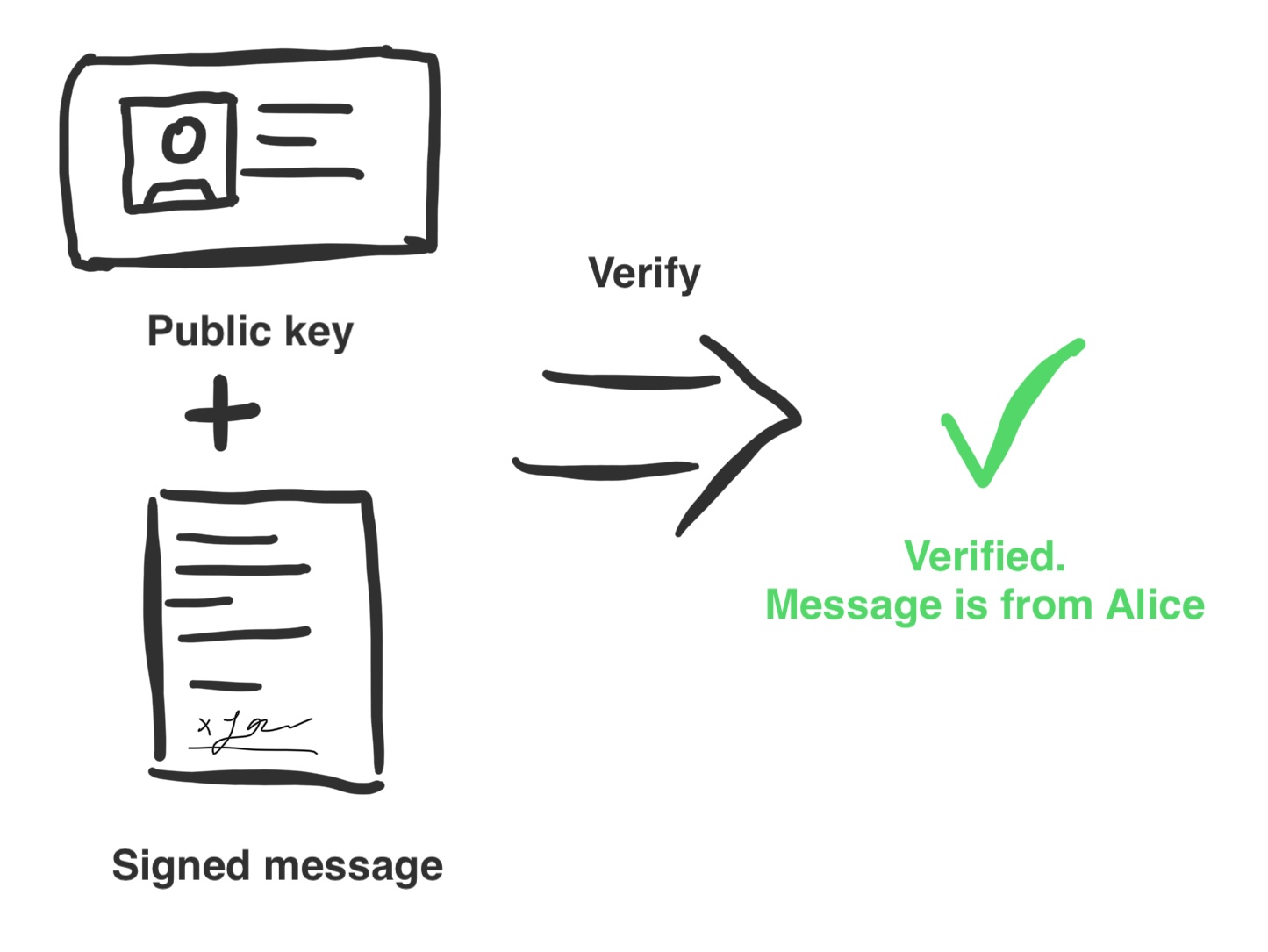
- Alice sends the signed message to Bob. Bob can use Alice's public key to verify that the message was signed by Alice. If the signature is valid, Bob can be sure that the message came from Alice.
Real use case examples
- SSH access: SSH (Secure Shell) can use these keys to prove that you are allowed to access a certain computer without having to send your password.
- Digitally signing software packages: Software publishers often use GPG/PGP to digitally sign an app and prove that a given app package is from them (and not a malicious impersonator).
- Bitcoin: Bitcoin uses asymmetric cryptography to prove that a financial transaction was authorized by the owner of a specific wallet.
- Nostr: Nostr is a novel social networking protocol that uses asymmetric cryptography to verify that social media posts were actually published by their author, without requiring an authority or a centralized server.
Further learning
This guide is a very high-level overview of asymmetric cryptography. If you want to learn more, here are some resources: